Table of Contents
By Matt Lee of Urban Garden Supply Light is one of the most important factors when growing Cannabis indoors. A ton of growers spend a ton of cash on really great lighting, and then they kinda waste it. So here is a little bit about how to actually make the most out of your system.
Light optimization means to get the most out of the lighting equipment you have. Some of the key factors include plant spacings and depth under the light as well as light intensity and evenness.
“I think people need to be educated to the fact that marijuana is not a drug. Marijuana is a flower.”
– Willie Nelson
Changing the light schedule in your grow can cause all kinds of different effects on the development of the plants and the size, weight and quality of the harvest.
Understanding Light Intensity
I hear that marijuana plants need light to grow. But too much of anything can’t be good for them? Is that right?
Light intensity is measured by calculating the PPFD (Photosynthetic Photon Flux Density), which is the amount of usable light that is received by the plant canopy.
Typical PPFD ranges include:
• Seedling stage: 200–300 PPFD
• Vegetative stage: 400–600 PPFD
• Flowering stage: 700–900 PPFD
The light intensity required to avoid light stress and to grow plants optimally is in the following ranges.

Light Optimization Table
Growth Stage | Recommended PPFD | Light Distance (LED) |
|---|---|---|
| Seedling | 200–300 PPFD | 60–75 cm |
| Vegetative | 400–600 PPFD | 45–60 cm |
| Flowering | 700–900 PPFD | 30–45 cm |
💡 Tip: Always observe plant reactions and adjust light height accordingly.
Finding the Ideal Light Distance
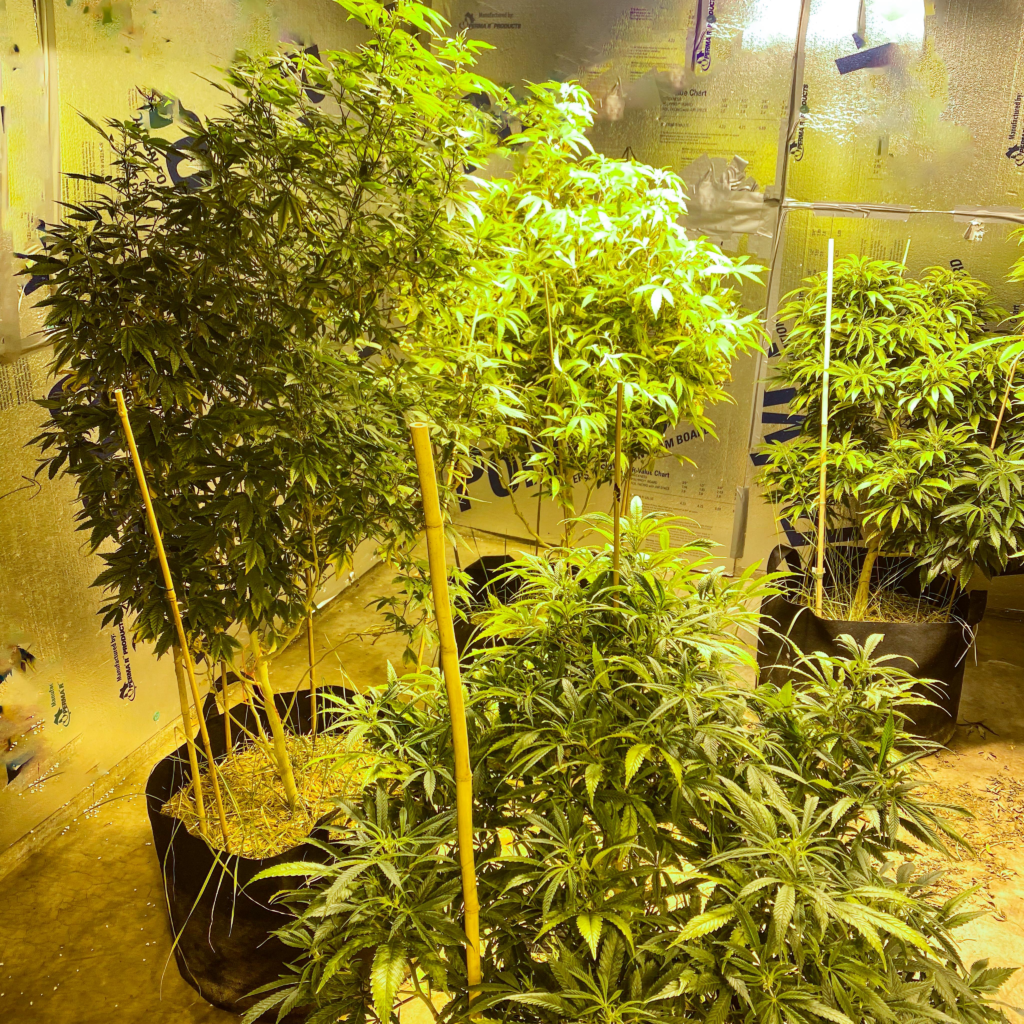
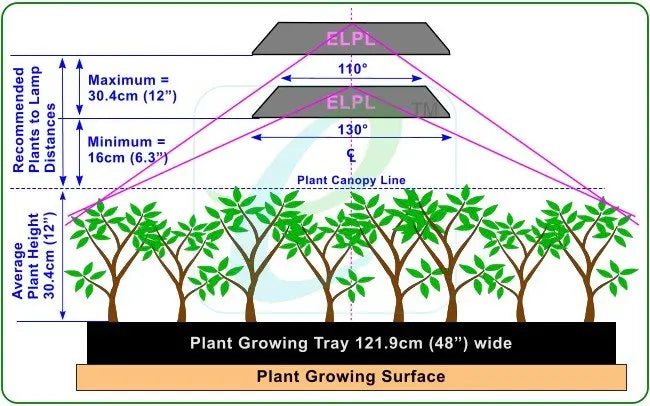
One of the most common mistakes beginners make when growing plants is positioning the light too far away or too close to the plants.
If the lights are too close to your plants they can actually burn out your plants and cause heat stress. You may notice leaves begin to curl, become light in color or develop a yellow tint.
If the light source is too far away for the plant then the plant will overgrow.
As a general rule:
• LED grow lights: 30–60 cm from canopy
• Seedlings: higher distance
• Flowering plants: closer distance
As plants grow they require more light. By increasing the height of your grow lights you can ensure that the light intensity is right for your mature plants.
Achieving Even Light Distribution
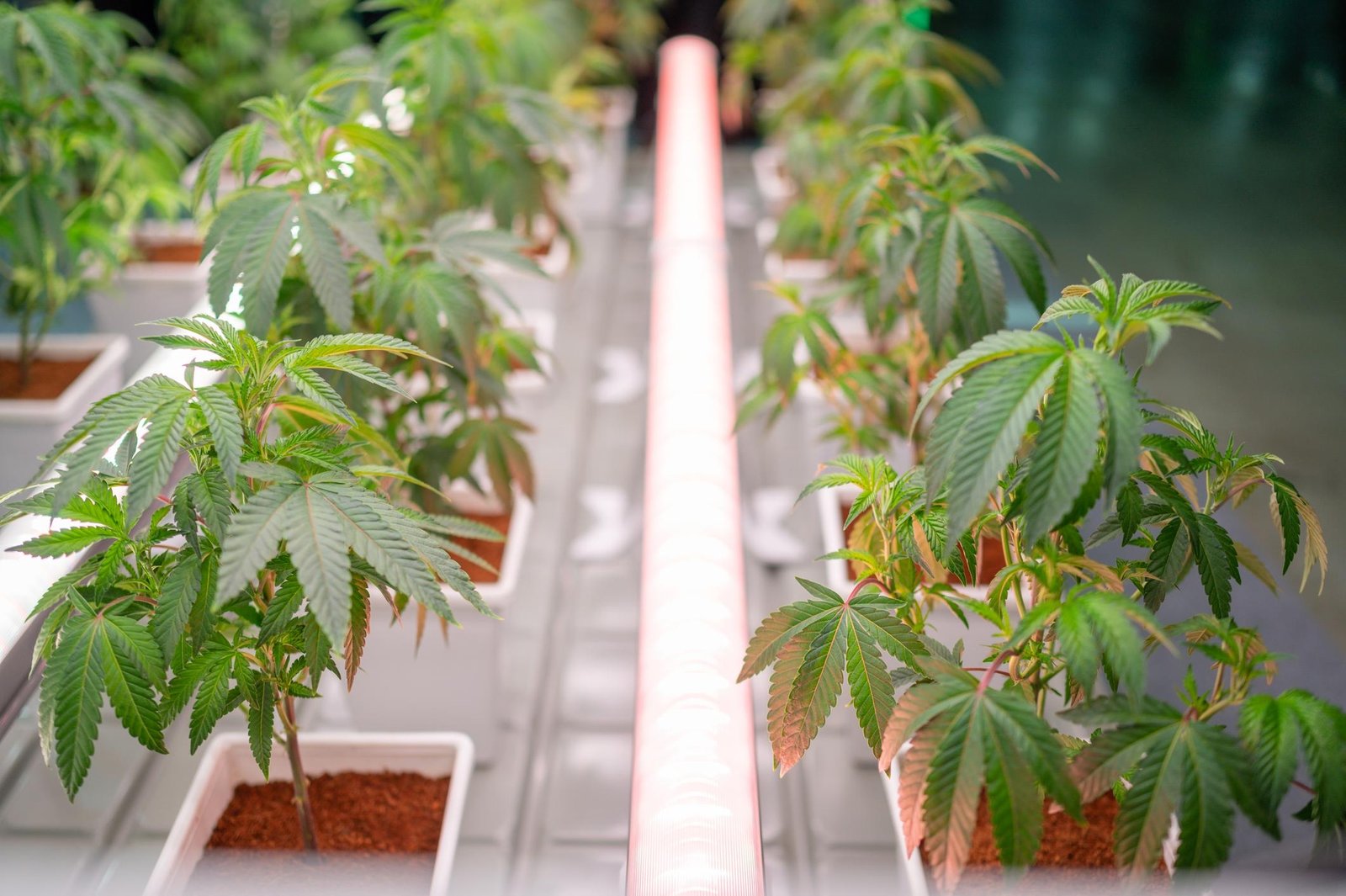
The other factor that has an impact on light optimization is an even light distribution in the plant canopy.
If the plant is getting enough light, especially on the top, and the lower leaves are in the shade, then new growth from the lower branches will only produce small buds.
Growers can improve light distribution by:
• Using reflective grow tents
• Training plants with techniques like LST
• Spacing plants properly
• Using multiple smaller lights instead of one large light
These strategies allow more bud sites to receive sufficient light.
Adjusting Light Schedules
Cannabis plants respond strongly to light cycles.
Most indoor growers follow these schedules:
• Vegetative stage: 18 hours light / 6 hours dark
• Flowering stage: 12 hours light / 12 hours dark
In comparison to traditional varieties, Autoflower plants generally respond quite well to an 18–24 light period, as they do not depend on the photoperiod to start flowering.
Maintaining a consistent light schedule is essential for healthy plant development.
Managing Heat from Grow Lights
Heat produced by your grow light will increase the temperature of your grow tent. If the temperature is increased too far beyond a comfortable range, it can cause thermal shock to your plants and inhibit growth.
Low temperature: High heat is a problem that needs to be addressed for good growth. Ventilation, fans and good spacing between lights and the canopy all help to keep temps in check.
I think the most popular growing light used by people growing plants indoors is the LED light. It seems that LEDs are made for a variety of reasons. The first being that they produce far less heat then other light sources, this is very important to consider when choosing light for plants. Another is that LEDs are much more energy efficient. LEDs also last for many years with little to no change in their brightness.
Common Light Optimization Mistakes
Many growers unknowingly reduce their yields due to simple lighting mistakes.
Common issues include:
• Lights placed too far from plants
• Uneven light distribution across the canopy
• Incorrect light schedules
• Ignoring plant signals such as leaf curling or bleaching
You’d be surprised the pay-off you get from understanding the basic plant and photosynthesis response to light. Spending a bit of time and experimenting and observing can give you a knowledge base that will help you a great deal in the long run. Knowing where to place your light and how to position your crop will greatly increase your yield and ensure optimal growth.
Final Thoughts
Light optimization is just as important as choosing the correct light fixture. Adjusting light zone distance, intensity and coverage can have a huge impact on crop quality and yields.
Light is an essential factor for providing energy to your plant so that it grows a healthy plant with thick buds and reaches its full genetic growth potential.
Indoor growing is a complex system. Success can be achieved by learning the basics and a few simple adjustments. One of the most important aspects of growing that must be understood to have successful crops is light optimization.
Read More Article: Coco Growing Techniques for Cannabis
How far should grow lights be from cannabis plants?
Most LED grow lights should be placed 30–60 cm from the plant canopy, depending on the growth stage and light intensity.
What is the best light schedule for indoor cannabis?
Most growers use 18 hours of light during vegetative growth and 12 hours during flowering.
Can too much light damage cannabis plants?
Yes. Excessive light intensity can cause light burn, leading to bleached leaves and slowed plant growth.